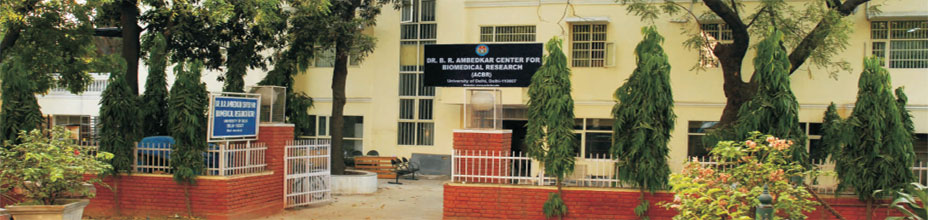
The Center
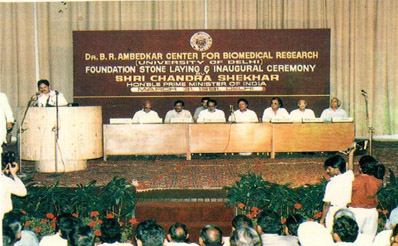
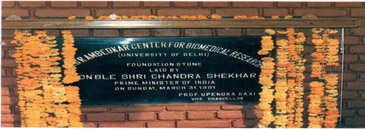 Dr. B.R. Ambedkar Center for Biomedical Research (ACBR) came into existence in March 1991 with the foundation stone laid by the then Hon'ble Prime Minister of India Sh. Chandra Shekharji, on the occasion of the birth centenary of Baba Saheb Dr. B.R. Ambedkar. The Government of India established this Institute at the University of Delhi under the leadership of Prof. Ramesh Chandra. The mandate of the Centre is high quality postgraduate education and research in Biomedical Sciences. The institute also has provision for doctoral and postdoctoral training to young scientists at the start of their research career to gain the skills and insights in frontier areas of biomedical sciences. During the last two decades the center has grown to have strength of 220 comprising faculties, students, Ph.D scholars and supporting staff.
In the year 1992, the University finalized the Ordinance relating to the ACBR, which was duly approved by the Hon'ble Visitor the President of India in 1997, when ACBR expanded and formalized its educational role by becoming a University Maintained Institute for Graduate and Post Graduate teaching and research for pursuing M.Sc. and M.Sc. - Ph.D. combined degree courses in Biomedical Sciences. The first batch of M.Sc - Ph.D and M.Sc. candidates was admitted in 1998, though the research activities of ACBR have been continuing since 1991 in a historical laboratory in the Department of Chemistry, where the CSIR and ICMR were born.
 ACBR presents a unique amalgamation of basic and applied research in the field of human health and disease, which is first of its kind in the Indian University System. The innovative and creative vision of the Ex-Vice-Chancellor, Prof.Gurbakhsh Singh, Founder Director, Prof. Ramesh Chandra and other Professors at the Chemistry Department and eminent scientists and faculties of Delhi University and generous financial support from Planning Commission, Government of India,
University of Delhi, UGC, DST, DBT, CSIR, UNESCO, Polariod Corporation, USA and other agencies helped in the establishment and extension of Dr. B.R. Ambedkar Center for Biomedical Research.
ACBR presents a unique amalgamation of basic and applied research in the field of human health and disease, which is first of its kind in the Indian University System. The innovative and creative vision of the Ex-Vice-Chancellor, Prof.Gurbakhsh Singh, Founder Director, Prof. Ramesh Chandra and other Professors at the Chemistry Department and eminent scientists and faculties of Delhi University and generous financial support from Planning Commission, Government of India,
University of Delhi, UGC, DST, DBT, CSIR, UNESCO, Polariod Corporation, USA and other agencies helped in the establishment and extension of Dr. B.R. Ambedkar Center for Biomedical Research.
The Institute's first Governing Body was formed in 1996, and an outstanding scholar, a great institution builder and administrator, Padma Bhushan, Late Prof. Gurbakhsh Singh became the first chairperson. At present Prof. Vivek Suneja the Pro-Vice Chancellor of Delhi University is the Chairman of the Governing Body. Under the able guidance of eminent scientists and visionaries, the center continues to make excellent progress in both teaching and research in biomedical sciences.
Academic Structure
Dr. B.R. Ambedkar Center for Biomedical Research (ACBR) possesses a unique structure having an interdisciplinary, goal oriented approach with an objective to meet the high standards of research and teaching in Biomedical Sciences. Specialised laboratories, rather than conventional departments, are the fundamental units of the ACBR. Typically headed by a senior faculty, the lab may include several other faculty and scientists from neighboring institutes such as IGIB, INMAS, DIPAS, VPCI, ICPO, AIIMS etc. in addition to postdoctoral fellows and Ph.D. students, who share common scientific interest and teaching at the center . This structure provides flexibility and enhances the opportunity for wide intellectual interaction and collaboration and minimizes the administrative traffic that may impede university life.
The post graduate teaching program is dedicated to educating a carefully selected group of students considered as potential leaders in their area of specialization. Students associate with a faculty/scientist-scholars, all actively engaged in research, and learn primarily through a combination of courses, discussion groups, tutorial guidance, and apprenticeship in research laboratories.
The faculty of ACBR and other departments of University of Delhi, IGIB, INMAS, DIPAS and VPCI, ICPO, AIIMS collaborate in offering a M.Sc.-Ph.D. program of advanced study and research in advanced Biology, Chemistry and Biomedical Sciences. In addition to the didactic teaching, the ACBR arranges many research colloquia, seminars, lectures by visiting scientists under SURP (Summer Undergraduate Research Program) and other special scientific programs.
Prof. Gurbaksh Singh chair in Biomedical Sciences at ACBR
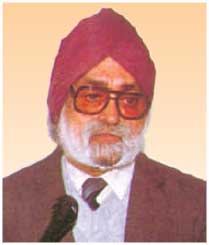 A regular post of Prof. Gurbaksh Singh Chair Professor in Biomedical Sciences was instituted in 1998 by the Executive Council of University of Delhi at Dr. B. R Ambedkar Center for Biomedical Sciences to commemorate Prof. Gurbaksh Singh was an eminent organic chemist, great visionary and institution builder. He was Professor and Head at the Department of Chemistry and Dean, Faculty of Science at Banaras Hindu University, Varanasi. He moved to Hyderabad as founder Vice-Chancellor of University of Hyderabad before finally moving to University of Delhi as a Vice-Chancellor from 1980-85. He was the founder Chairman of the Governing Body of ACBR. The University created the Chair to honour his great contribution in the field of science and education in India. The Chair was first occupied by Prof. Yogendra Singh in 2000 for a short period and later Prof. B.C. Das was appointed and is holding this prestigious Chair since 2008.
The Campus
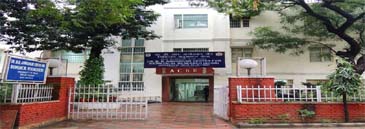 Located in the heart of the University of Delhi, and is in front of the Old Vice Regal Lodge, which is the Vice Chancellor's office. It is 3 Km. from ISBT (Inter-State Bus Terminal), 4 Km. from Delhi Railway Station, and 20 Km. from Indira Gandhi International Airport.
The University campus is located near the Aravali foothills sprawling over 30 km. The building of ACBR houses, teaching rooms, research laboratories, Central instrumentation rooms with sophisticated research equipment facility, seminar halls, animal house and is surrounded by other Science Departments- Central Science Library and VP Chest Institute -with 50 bed hospital, which provides clinical research facility.
Immediate neighbors are IGIB (Institute of Genomics and Integrative Biology) - a laboratory of CSIR dedicated for Biomedical and Genomics Research, Institute of Nuclear Medicine and Allied Sciences (INMAS), Defence Institute of Physiology and Allied Sciences (DIPAS) of DRDO (Defence Research & Development Organization), Rajan Babu T.B. Hospital and Hindu Rao Hospital. The ACBR also operates a laboratory and Animal Research Facility, which is duly approved by the Government of India.
The locale is a lively residential area with many shops and restaurants and is convenient to Delhi's resources for culture and recreation.
Housing on campus for single student is available in the University Halls/Hostels. For married students no campus housing is available, rather they rent the accommodation around the campus. There is a dining facility for the faculty and students on the University campus. For visiting faculty accommodation is made available in the University Guest House and International Guest House.
The ACBR library contains only specialized books however the Central Science Library has more than 3 lakh books and scientific journals and it operates on an “Open Stacks” policy. ACBR organizes lectures and seminars by inviting expert scientists and academicians from time to time.
Dr. B.R. Ambedkar Center for Biomedical Research along with its neighboring science and medical institutions and other undergraduate colleges on campus provide a unique academic environment for scientific interaction and collaboration.
Development of ACBR
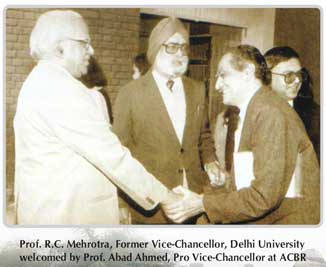 The excellent environs of Delhi University has nurtured and nourished ACBR to develop into a healthy sapling that was sowed in 1991. Apart from the research activities taken up by the Center, a M.Sc. - Ph.D. combined program in Biomedical Sciences was started in 1998. The admission is based on national entrance examination followed by an interview and group discussion. This is distinct and unique from the numerous M.Sc. Biotechnology courses all over the
country. Each year we admit 48 students for M.Sc.- Ph.D. Combined degree program and around 20 for Ph. D. in Biomedical Sciences including direct admission of graduate students to Ph. D. program.
The excellent environs of Delhi University has nurtured and nourished ACBR to develop into a healthy sapling that was sowed in 1991. Apart from the research activities taken up by the Center, a M.Sc. - Ph.D. combined program in Biomedical Sciences was started in 1998. The admission is based on national entrance examination followed by an interview and group discussion. This is distinct and unique from the numerous M.Sc. Biotechnology courses all over the
country. Each year we admit 48 students for M.Sc.- Ph.D. Combined degree program and around 20 for Ph. D. in Biomedical Sciences including direct admission of graduate students to Ph. D. program.
The course conducted under the programme is truly inter-disciplinary and encompasses Organic chemistry to Medicinal chemistry, Pharmacology, Toxicology and Clinical Research on one hand, while on the other Biochemistry to Immunology, Physiology, Genomics and Molecular Oncology. The students carry out a summer internship and a one-semester project dissertation during the fourth semester. Apart from our own laboratories for both teaching and research, we take advantage of well-equipped national laboratories of CSIR and DRDO. This is an approach for the improvement of research activities at Universities through collaboration and effective utilization of national resources and facilities.
With an interdisciplinary course of this nature, started for the first time in this University, we have developed a library facility to cater to the needs of the students. Over the last 12 years, we have built up a library with thousands of books covering the entire gamut of courses taught as a part of this program. We have also established a computer facility for the students with more than 60 computers, with internet connection linked with the university network including a DBT –funded Bioinformatics Centre.
We are indeed proud, of the achievements of our students in the National Tests. On an average over the last 10 years >80% of the students qualify for Junior Research Fellowship based on national level test conducted by different funding agencies. Consequently our students get opportunity to pursue Ph.D. programmes not only at ACBR but also at premier institutes of India and abroad. This is a befitting tribute by the students for the dedicated efforts of the teachers at the Center.
ACBR has received several grants from various national and international agencies, including UGC, DBT, CSIR, DST, ICMR and DRDO, as well as international agencies such as UNESCO, SIDA, Polaroid Corporation, USA, HIKMA Pharmaceuticals, Jordan. Our faculty members publish papers in reputed national and international peer reviewed journals. The Center has also special facilities such as Bioinformatics facility (DBT), Animal House, LC / MS, NMR, FACS and confocal facility.
The spirit of science and the zeal for excellent research are kept alive by several national and international symposia and special expert lectures organized at the Center specifically to inspire students/researches through their brilliant deliberations.
The Faculty
ACBR has core faculty in the field of Chemistry and Biology, thus facilitating research and teaching in interdisciplinary areas in Biomedical Sciences. The areas of research pursued by the faculty encompasses molecular pathology of infectious diseases, Molecular Oncology, Gene Regulation, Molecular Genetics, Medicinal Chemistry and Natural Product Chemistry, Drug Discovery and Drug Designing, Bioinformatics and Molecular Microbiology and Immunology. The research currently underway in each of the laboratories at ACBR Neuropharmaceautical chemistry, Protein chemistry and Genetics is outlined under the faculty profile in subsequent pages. Over the years, scientists associated with this Center have achieved national and international acclaim through their publications in, reputed journals, in national and international awards. Several young faculties- Dr. Anju Katyal, Dr. Manisha Tiwari, Dr. Vibha Tandon have received the “Young Scientist Research Award” of the Department of Science and technology, Govt. of India for their research work. This apart the scientists at ACBR are recipients of INSA-Royal Society fellowship, INSA visiting fellowship, DBT overseas fellowship, INSA young scientist award. Several senior faculties have received national and international awards and are fellows of national science and medical academies. Recently, as many as six new faculties have been appointed and one of them (Dr. Ajay Yadav) has been awarded the most prestigious Ramalingaswami fellowship by the DBT. Prof. B.C. Das is the recipient of prestigious J.C. Bose National fellowship. The faculties at ACBR have several patents to their credit and filed several patents on new molecules of therapeutic potential and diagnostic tools for infectious diseases both in India, UK, USA, and Europe and in other countries.
The founders and faculties of the Center have evolved novel approaches to teaching using the knowledge resources available not only at other Departments of the University but also at the National laboratories and teaching Medical Institutes in Delhi. Several seminars and lectures by experts from National laboratories and Medical institutes are conducted periodically on specialized topics as a part of the course. This has led to the effective utilization of National resources and man power and the students get an exposure to the research focus of the National institutes, which in turn facilitates the informed choice to students for the areas of research and the institutions where they could pursue their Ph.D. programme. In the beginning years, Center was fortunate to have the association and advice of eminent scientists like Prof. Sukh Dev, Prof. P.S. Murthy Prof. S.K. Brahmachari , Prof. G.P. Talwar, Prof. Indra Nath, Prof. V.S. Chauhan, Prof. G.B.V.Subramaniam and Prof. V.K. Aluwalia. It is matter of pride to ACBR that several scientists of Institute of Nuclear Medicine and Allied Sciences (DRDO), Defence Institute of Physiology and Allied Sciences (DRDO), Institute of Genomics and Integrative Biology (CSIR), Ranbaxy Research Laboratories, V.P. Chest Institute (DU), G B Pant Hospital, Maulana Azad Medical College, Lady Harding Medical College, Jamia Hamdard, Institute of Cytology and Preventive Oncology (ICMR), Noida, All India Institute of Medical Sciences (AIIMS), University College of Medical Sciences, National Institute of Medical Statistics, Indian Council of Medical Research (ICMR) as well as other Departments of Delhi University eg, Zoology, Chemistry, Anthropology, Computer Science, and Microbiology have been supporting academic activities pursued at ACBR.
Supporting Staff at ACBR
There is a team of dedicated and hardworking supporting staff at ACBR who have played a vital role since inception and in the progress and development of ACBR. They take pride in their contribution to the Center and work hard without counting holidays or looking at their watch. Several of them continue to advance their educational and professional qualifications along with the job.
Scientific Interaction Platforms
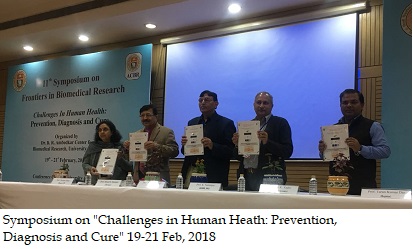
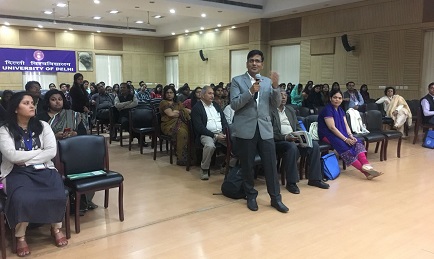
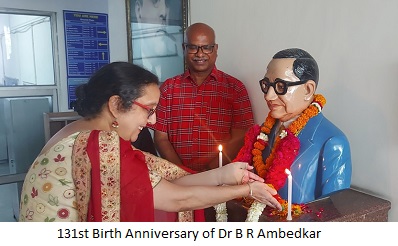 The Center provides an opportunity for students and faculty for sharing the research findings with a larger scientific community through National international symposia/conferences. An annual meeting titled “Frontiers in Biomedical Research” is organized every year to commemorate the birth anniversary of Baba Saheb Dr. B.R. Ambedkar. Since its inception the center has organized seven such national level seminars. During this symposium all the Ph.D. students are encouraged to present their thesis work, as posters or platform presentations. Beside these, a regular workshop on Bioinformatics and Molecular Modeling in drug Design is conducted on yearly basis with financial support from DBT by the Bioinformatics Infrastructure Facility of the center. ACBR also organized an International seminar on “Interface between Chemistry and Biology” in 2004. ACBR organized the 34th Annual Convention of Chemists (during Jan. 1-3, 1997), which was attended by a galaxy of eminent scientists both from India and abroad. A two day seminar was organised on “Current Status of Oral and Implantable Contraceptive Agents”, an area where research would be tremendously beneficial for the nation at large. A seminar on Drug Discovery and Development was held on December, 1998. The President of the American Chemical Society, Prof Ed. Wasserman and Dr. Satinder Ahuja, Visiting Faculty ACBR, from Pace University, USA delivered keynote addresses. In addition a large number of seminars, refresher courses, summer programs, invited lectures of eminent scientists and professional technologists were held during last Twenty-Five years.
Participating Laboratories
For the postgraduate and research students at ACBR, the laboratory is the principal site of learning. The expansion of ACBR's scientific program gives students access to an unprecedented range of faculty expertise and research opportunities.
Thirty-six members of the senior and junior faculty/ scientific staff also include faculty from Institute of Genomics and Integrative Biology (IGIB-CSIR), Institute of Nuclear Medicine and Allied Sciences (INMAS), Defence Institute of Physiology and Allied Sciences (DIPAS) and V.P. Chest Institute (VPCI) investigators. These investigators are fully integrated into the scientific activities of the ACBR. As well as providing full support for the investigators, IGIB, INMAS, DIPAS, ICPO and VPCI has facilitated the development of research facilities used by all ACBR faculty and provides support for graduate fellows and summer undergraduate research fellows from all the collaborating institutions. A detailed description of the work in each laboratory together with up dated bibliographies can be found at the respective websites for. IGIB (www.igib.res.in), DIPAS(www.drdo.gov.in), INMAS (www.drdo.org), ICPO(www.icpo.org.in) and ACBR (http://www.acbrdu.edu).
Institute of Genomics and Integrative Biology (IGIB, CSIR)
Institute of Genomics and Integrative Biology (IGIB), a constituent laboratory of the Council for Scientific and Industrial Research (CSIR), and Dr. B.R. Ambedkar Centre for Biomedical Research have signed a MOU in 1998 for conducting joint academic programs viz. Integrated MSc-PhD, MSc, MPhil and PhD Programs, as well as collaborative research. Presently Dr. Rajesh Gokhale an eminent scientist heads the Institute.
With its beginnings in preparative biochemistry for isolation of fine Biochemicals from natural resources viz., proteins, lipids, enzymes, synthesis of bioorganic compounds like peptides, oligonucleotides and preparing reagents required for recombinant-DNA research, the current focus of IGIB is the new and upcoming field of Genomics. As biochemical technology enters the genomics era, the Centre has transformed into a network laboratory with a large number of collaborations with clinicians in major hospitals and other research institutes, leading to the formation of a virtual institute of new biology.
IGIB's research areas include Allergy and Infectious Disease, Genomics and Molecular Medicine, Nucleic Acids and Peptides, Genome Informatics, Proteomics and Structural Biology, Comparative Genomics and Gene Expression, Environment Biotechnology, and Bioactive Molecules. Scientists from IGIB provide Consultancy and Technical Services to other research institutes and industry. In addition, IGIB has also upgraded its Biochemicals sales facility by setting up a National Facility for Biochemicals & Genomic Resources. Participating Laboratories Institute of Genomics and Integrative Biology (IGIB, CSIR) THE CENTER ACBR 9 IGIB (CSIR) by partnership with private sector has created the Center for Genomic Application (TCGA) as a co-shared not-for-profit facility for high-end genomic, research providing access to DNA sequencing, Proteomics and expression array analysis to the research community.
DRDO-Institute of Nuclear Medicine and Allied Sciences (INMAS)
Institute of Nuclear Medicine and Allied Sciences and Dr. B.R. Ambedkar Center for Biomedical Research have signed a MOU for conducting collaborative research and academic activities in 1998.
INMAS, an apex National Institute under the auspices of Defence Research and Development Organization (DRDO) is located close to the University of Delhi and ACBR. The institute, led by a distinguished Biomedical Scientist Dr. R.P. Tripathi, is actively involved in the academic program of ACBR and participating in the M.Sc. and M.Sc.-Ph.D. Programs of the Center. Created initially as a center for the application of Radioisotope Technology in Medicine, INMAS has been a pioneer in the management of Thyroid disorders. Besides the thyroid clinic and diagnostic facility, a full-fledged endocrine center is in the offing.
The institute has special expertise in the fields of Radiation Biology, Biocybernetics, Radiopharmaceuticals, Health Physics, Radiation safety and dosimetry, Thyriodology, Radiological Imaging, Nuclear Medicine, Non-invasive cardiology, Dental Sciences and certain areas of Biomedical Technology. INMAS is well equipped with “State of the Art” technology to support research in certain aspects of Biomedical Sciences, that include MRI, CT, SPECT, Ultrasonography, Mammography, Gamma Camera, Flow cytometer, Time Resolved Spectrofluorimeter. Recently PET facility and NMR facility has also been added. The institute offers informal training in the field of Biosciences leading to Ph.D degree in collaboration with Universities and a full time Diploma in Radiation Medicine course. In addition, training is being imparted to medical personnel in Nuclear Medicine and Diagnostic Radiology.
The institute has made significant contributions in advancing the knowledge, leading to the improvement in Radiotherapy as well as Photodynamic therapy of cancer. INMAS has developed a variety of radiopharmaceuticals for diagnostic investigations and clinical research, which are currently in use at many centers in the country. The current focus of research is directed towards the development of Biomedical approaches for radioprotection and Non-invasive imaging technology, besides evolving new methods for diagnosis and treatment of thyroid disorders.
DRDO-Defence Institute of Physiological and Allied Sciences (DIPAS)
Defence Institute of Physiological and Allied Sciences and Dr. B.R. Ambedkar Center for Biomedical Research have formalized a MOU for conducting collaborative research and academic activities. Dr. P.K. Banerjee. Director DIPAS has taken keen interest in R&D collaborations and teaching at the Center.
Research in physiology as applied to Armed Forces was first initiated in the year 1950 through a small group in the then Defence Science Laboratory, Delhi. In the wake of Chinese aggression, the thrust was shifted to the grey area of high altitude physiology, psychology, nutrition and biochemistry. With the increased quantum of investigations, a full-fledged laboratory, Defence Institute of physiology and Allied Sciences (DIPAS) was established at Madras in the year 1962.
Over the years it has contributed extensively in solving the problems faced by Defence personnel at high altitude, hot desert conditions, in warships, tanks and aircraft cockpit resulting in better performance. Studies in the areas of noise and vibration led to a safer and comfortable working environment. The institute is engaged in appropriate investigations in the fields of anthropometry in effecting suitable design of clothing and protective ensembles and physiological evaluation of the same in simulated environments. The Institute is well equipped with advanced versions of instruments, simulation chambers of environments and documentation facilities along with a blend of DRDO-Institute of Nuclear Medicine and Allied Sciences (INMAS) DRDO-Defence Institute of Physiological and Allied Sciences (DIPAS) ACBR ACADEMIC BULLETIN 10 young and highly experienced scientific staff. Besides this focus of research on Armed Forces problems the Institute always looks forward to promote the spin off benefit to the society at large.
The institute has the privilege of having conducted collaborative projects with the erstwhile USSR in Polar Physiology and participates in physiological research studies in the country's Antarctic programs. Further, the US Army Research Institute of Environmental Medicine has also evinced keen interest for collaborative studies in the fields of physiology, nutrition and biochemistry. The institute is recognized by many universities for Ph.D. programs. In the field of Physiology and allied sciences the Institute holds leading role in the Armed Forces and the nation as whole and is so recognized by the international scientific originations in these fields. The following departments/groups form the Organizational set up of the Institute: High Altitude Physiology, Thermal Physiology, Human Performance Laboratory, Biochemistry, Nutrition, Audiosonics & Vibration Laboratory, Human Engineering & Ergonomics, Radio Biology, Endocrinology, Reproduction, Psychophysiology and Biostatistics make the major departments/ Laboratories of the Institute other than resource generation and support services including Exhibition, Administration, Material Management etc.
VP Chest Institute
The Vallabhbhai Patel Chest Institute (VPCI) is a unique research institution devoted to the study of and to training postgraduates in chest diseases in India. Besides, it also provides specialized clinical and laboratory reference diagnostic and treatment services. It is ideally located in the Delhi University main campus, providing the requisite academic environment in which a wide range of scientific facilities is available in various departments along with an excellent Central Science Library. Ever since its inception, the main objective of VPCI has been to conduct research on fundamental and clinical aspects of chest diseases, to develop new diagnostic technology and disseminate it to other institutes in the country. The training of postgraduates in tuberculosis and respiratory diseases and allied subjects is another important objective of VPCI. Additionally, specialized clinical and laboratory referral diagnostic services are also provided.
Financial Support to ACBR
ACBR is in its early stage of development generous financial support is provided by Planning Commission, UGC and the Central Government. In addition national and international foundations, corporations and philanthropic individuals have supported science at the Center. This has enabled us to develop state-of-the-art research laboratories and a beautiful campus of ACBR.
The University of Delhi has provided support to the Center, since its inception. The University has provided a building to the Center in the heart of the campus, close to the historical monument - the “Old Vice-Regal Lodge”. In addition to science departments of Delhi University, the immediate neighbours are VP Chest Institute, CSIR-Institute of Genomics and Integrative Biology, Defence Institute of Nuclear Medicine & Allied Sciences, Hindu Rao Hospital, DRDO, DIPAS, etc. The Polaroid Corporation, USA has provided the Center with substantial generous donation of lab equipments and an Annual Grant for research activities. The ACBR aims to get more support from foundations, endowments, International exchange/research Programs and Multinational Corporations. Generous funding for the educational and training programs enables the Center to provide full financial support to every Ph.D and M.Phil. students, and also to the undergraduate research trainees.
Research Facilities at ACBR
The ACBR is fully equipped with latest state of art scientific instruments which include 400 mHz NMR (Bruker), FACS (BD Biosciences), FT-IR, Circular Dichroism Spectrophotometer (CD), HPLC, GLC, UV-Vis- Spectrophotometers, LCMS-Qstar XL (Applied Bio Systems), Fluorimeter, Gel documentation system, Real Time PCR, Phosphoimager, Confical Microscope, Mammalian and Bacterial Cell Culture Facility, PCR machines, Olympus compound microscope etc. The Animal House facility supports the Center's animal based research through a comprehensive program of animal care and the toxicological research. The Center has a Conference Hall for lectures, symposia and other academic activities. As mentioned in subsequent pages the Center has Bioinformatics Facility to carry out Bioinformatics and in silico modelling for Protein & Drug Designing in University of Delhi which is supported by Department of Biotechnology (DBT).